Workflow Engine
Engine Interface
type EngineInterface interface {
    Start(c context.Context, configName string, worker Worker) bool
    Run() bool
    Done() *WorkerResponse
    Process(c context.Context, workflowName string, worker Worker) *WorkerResponse
    ApplicationContext() context.Context
    SetModulesPath(path string)
    SetWorkflowName(workflowName string)
    LoadJson(name string) error
    GetResolvers() []string
    GetFlow() *domain.Flow
    GetWorker() *Worker
    GetEngineName() string
    GetModulesDir() string
    GetApplication() pkg.Application
}
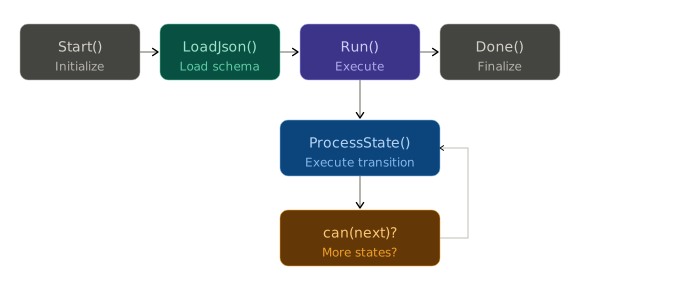
Execution Flow
Worker Interface
Workers process individual states within a workflow:
type Worker interface {
    Context() *map[string]interface{}
    SetContext(context *map[string]interface{})
    Start(w EngineInterface) bool
    InitResolvers(resolvers []string)
    PrepareContext(w EngineInterface, flow *domain.Flow) bool
    ProcessState(w EngineInterface, flow *domain.Flow) (bool, string)
    Done(w EngineInterface) *WorkerResponse
    ProcessStateError(w EngineInterface, flow *domain.Flow, errorMessage string)
    SetResponse(response any, statusCode ...int)
    GetResponse() (response any)
    HandleError(err interface{}, statusCode int) (success bool)
    SetError(error *issues.Issue, statusCode ...int) bool
}
State Types
| Type | Description |
|---|---|
initial | Entry point of workflow |
normal | Standard processing state |
final | Terminal state |
Workflow Execution Modes
The engine supports two execution modes: synchronous and asynchronous, with configurable restart policies.
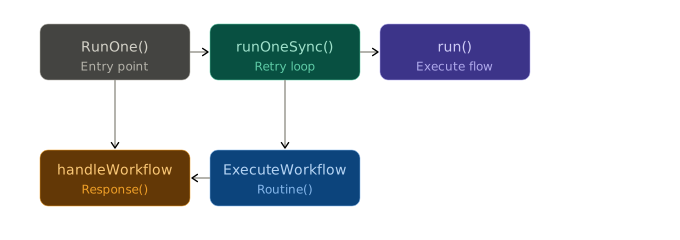
Synchronous Execution (run_sync.go)
Runs a single workflow instance with retry support:
func RunOne(wfConfig domain.WorkflowConfigItem, app pkg.Application, contexts ...map[string]interface{}) map[string]*WorkerResponse
Flow:
Asynchronous Execution (run_async.go)
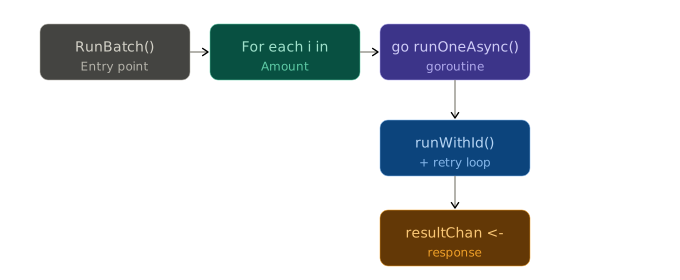
Runs multiple workflow instances concurrently using goroutines:
func RunBatch(wfConfig domain.WorkflowConfigItem, app pkg.Application, wg *sync.WaitGroup,
    resultChan chan *WorkerResponse, contexts ...map[string]interface{})
Flow:
Restart Policies
| Policy | Constant | Behavior |
|---|---|---|
always | RestartPolicyAlways | Always restart after completion |
on-failure | RestartPolicyOnFailure | Restart only on error |
stop | RestartPolicyStop | Stop after first execution |
Workflow Managers (engine/manager/)
High-level managers that coordinate workflow execution:
WorkflowManager (Async)
func WorkflowManager(engineName string, workflowName string, amount int, args ...string) map[string]*workflow.WorkerResponse
- Initializes workflow workers
- Configures workflow from config or defaults
- Uses
sync.WaitGroupfor concurrent execution - Collects results via buffered channel
WorkflowManagerOnce (Sync)
func WorkflowManagerOnce(name string, args ...string) map[string]*workflow.WorkerResponse
- Single-instance execution
- Simpler setup for one-off runs
HandleWorkflow Interface
Programmatic interface for workflow processing:
type HandleWorkflow interface {
    ProcessWorkflow(c context.Context, workflowName string, workflowContext *map[string]interface{}) *WorkerResponse
    GetEngine() *EngineInterface
    GetWorker() *Worker
}
Options:
debug: Enable debug loggingpreventLogError: Suppress error loggingpreventLogInfo: Suppress info logging
CLI and Entry Points
Application Entry Points
Generated projects include CLI entry points that can be built and run:
# Build the CLI application
make build-cli

# Run a workflow
./runtime/bin/myapp-cli [options] <workflow> [key=value ...]
Flags:
| Flag | Description | Default |
|---|---|---|
-v | Verbose mode (debug logging) | false |
-q | Quiet mode (suppress output) | false |
--amount=N | Concurrency (number of parallel instances) | 1 |
Example:
# Build first
make build-cli

# Run single workflow
./runtime/bin/myapp-cli workflows/hello_world.wsl message="Hello"

# Run with concurrency
./runtime/bin/myapp-cli --amount=5 workflows/batch_process.wsl input=data.json

# Verbose mode
./runtime/bin/myapp-cli -v workflows/debug_workflow.wsl
Root Entry Point (engine.go)
The package-level entry point:
func RunWorkflow(env string, options *domain.Options) map[string]*workflow.WorkerResponse {
    environment := domain.NewEnvironment(env, options)
    defer environment.ShutdownEnvironment()
    return manager.WorkflowManager(environment)
}
domain.Options (declared in engine/domain/application.go):
type Options struct {
    EngineName      string
    ConfigName      string
    Verbose         bool
    Quiet           bool
    Amount          int
    Retry           int
    RetryDelay      int
    RestartPolicy   string                 // "always" | "on-failure" | "stop"
    Workflow        string
    Version         string
    BuildTime       string
    LogPath         string
    Config          *Config
    Args            []string
    Context         map[string]interface{}
    Settings        map[string]interface{}
    EmbedFS         *embed.FS
    EmbedFSRootPath string
}